
Many people walk into their first class feeling excited but a little lost. They watch others move with precision and wonder, “How do I get there?” Understanding martial arts training fundamentals gives you a clear picture of how everything fits together, from your very first stance to your first sparring session.
We know that seeing the full structure early on makes the journey feel less overwhelming and a lot more exciting.
Martial arts training is not just about throwing punches. It combines posture, breathing, balance, muscle memory, and mental discipline into one system. We build these skills in layers. You start with basic movements repeated until they feel natural, and then you add speed, control, and partner work over time.
Think of it like learning to drive. Nobody hands you the keys on day one and says, “Good luck out there!” Instead, you practice each skill in a safe, coached environment before the pressure increases. That structure is what turns a complete beginner into a confident, capable martial artist.
Whether you feel intimidated by combat sports or you simply want to understand how the training process actually works, keep reading. We walk you through every layer of how martial arts practice is structured: drills, sparring, skill progression, and everything in between.
- What Are Martial Arts Training Fundamentals?
- Why Fundamentals Come Before Advanced Techniques
- Understanding the Basic Martial Arts Training Structure
- Fundamental Martial Arts Skills Students Develop
- Why Repetition Is Essential to Martial Arts Skill Development
- How Martial Arts Drills Turn Techniques Into Usable Skills
- The Role of Partner Training
- What Progressive Resistance Means in Martial Arts
- How Controlled Sparring Develops Martial Arts Skills
- How Feedback Improves Martial Arts Technique
- How Martial Arts Skills Progress Over Time
- Common Beginner Mistakes During Martial Arts Training
- How Beginners Can Practice Martial Arts More Effectively
- How the Different Parts of Martial Arts Training Work Together
- Building a Strong Foundation for Long-Term Martial Arts Training
- Common Questions About Martial Arts Training Fundamentals
- Start Your Martial Arts Journey With Confidence
What Are Martial Arts Training Fundamentals?
Martial arts training fundamentals are the basic building blocks of all martial arts practice. They include technique, movement, timing, and control. Without these, nothing else works well.
When we talk about fundamentals, we mean the core skills every student needs before moving forward. These are the things that make advanced techniques possible. Think of them as the base of a building.
If the base is weak, the whole structure becomes unstable.
Technique, movement, timing, and control
Technique refers to how we perform a movement. Movement refers to how we position and shift our body. Timing means knowing when to act. Control means doing all of this with purpose and precision.
These 4 elements work together. A punch thrown with poor timing loses its value. A kick done with perfect technique but no control creates bad habits. We need all 4 to train effectively.
Why Fundamentals Come Before Advanced Techniques
Many beginners want to jump straight to advanced techniques that look impressive. However, skipping the basics creates problems later. Poor foundations make advanced movements harder to learn and easier to get wrong.
We always see this pattern: students who rush past the basics struggle to fix bad habits. Students who build strong fundamentals first tend to progress faster overall. The investment in basics pays off every time.
How different martial arts apply the same learning principles
Whether we study Jiu Jitsu, Karate, Muay Thai, or Boxing, the learning process follows the same path. All arts use repetition, partner work, feedback, and gradual resistance. The techniques may differ, but the principles stay the same.
This is what makes martial arts training structure so valuable. The method works across all styles because it matches how our brains and bodies actually learn movement.
Understanding the Basic Martial Arts Training Structure
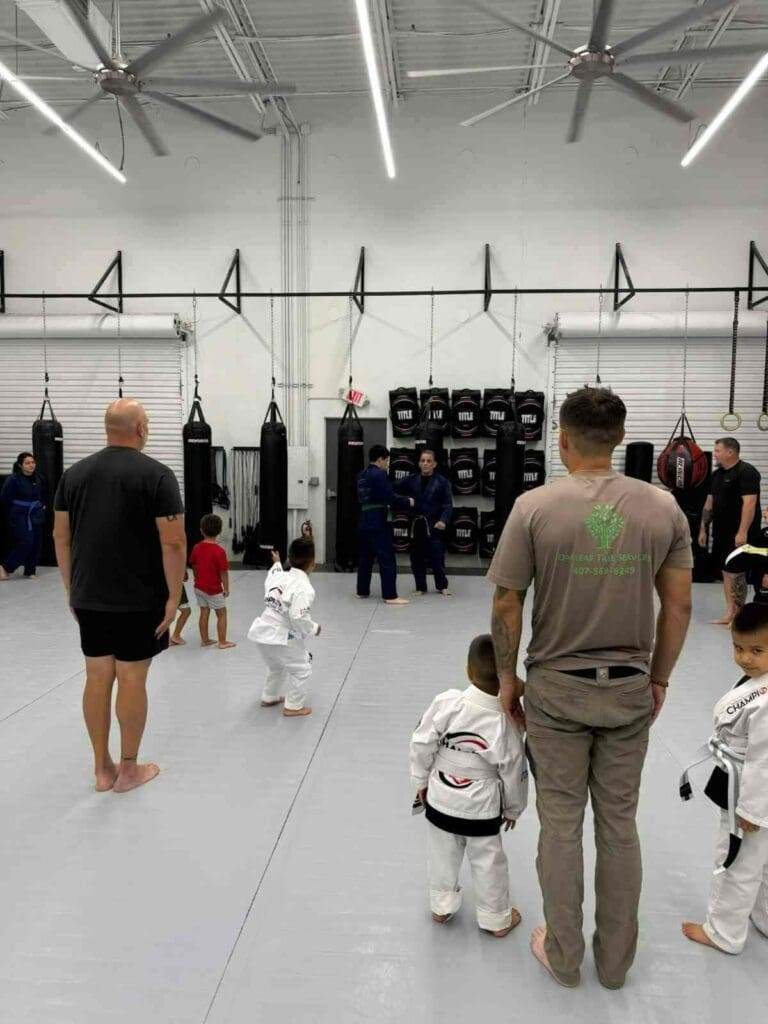
Good training does not happen by accident. It follows a clear structure that guides students from understanding to application. This is how effective martial arts practice methods are built. Beginners attending kids martial arts classes in Orlando will often encounter this same progression, moving from instructor demonstrations and individual practice to partner drills and gradually more challenging applications.
Instructor demonstrations and technical explanation
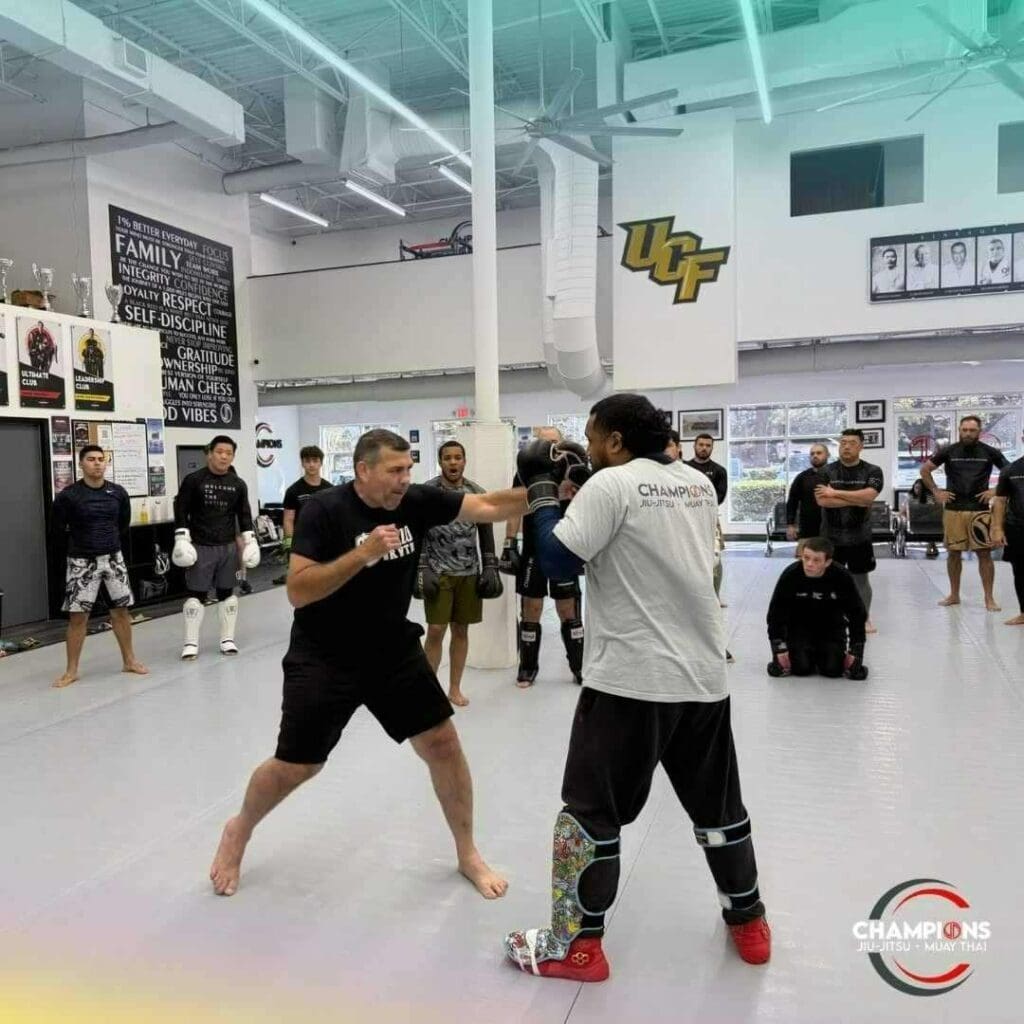
Every class typically starts with an instructor showing a technique. They explain the purpose, the mechanics, and the key details. This gives students a clear picture of what to practice.
Watching a skilled instructor is different from just reading about a technique. We get to see how the body moves, how the timing works, and what the finished movement looks like. That visual reference is important.
Individual movement practice
After the demonstration, students practice the movement on their own. This solo practice lets us focus entirely on our own body without distraction. We can slow things down and feel each part of the movement.
Solo drills also help with correct body posture, footwork, and basic striking fundamentals. These are easier to build when we are not yet dealing with a training partner.
Partner-based practice
Once the individual movement feels more natural, we begin working with a partner. This changes the experience completely. A partner adds a new layer of feedback and complexity.
Partner practice teaches us how the technique applies to another person. It also begins to develop our distance management and timing. Both of these are critical martial arts training fundamentals.
Progressive resistance and application
As we get more comfortable, partners begin to add resistance. This means they react more realistically instead of just cooperating. The goal is to make practice more like real application without jumping too far ahead.
The fundamentals of progressive training tell us that resistance should increase gradually. Too much too soon breaks technique. The right amount of resistance challenges us while still allowing us to move correctly.
Review, correction, and repetition
Instructors watch students throughout class and offer corrections. This feedback loop is essential. We repeat the movement, get feedback, and adjust. Then we repeat again.
This cycle is how skill is actually built. Repetition without review can reinforce mistakes. But repetition with good feedback builds correct, reliable movement patterns.
Fundamental Martial Arts Skills Students Develop
Fundamental martial arts skills are not flashy. But they are the skills that everything else depends on. We develop them gradually, and we keep refining them for as long as we train.
Stance and posture
Our stance is how we stand and hold our body. Correct body posture in a fighting stance affects everything, our balance, our ability to move, and our ability to defend. A poor stance creates weakness in all areas.
Instructors spend a lot of time on stance early in training. It may seem simple, but small errors in posture can affect technique for years if not corrected early.
Balance and body positioning
Martial arts balance training helps us stay stable while moving, attacking, and defending. Without balance, our techniques lose power and accuracy. Developing stability and concentration helps us stay grounded under pressure.
Body positioning refers to where we place ourselves relative to our partner. Being in the right position makes techniques easier to apply. Being out of position makes even simple moves difficult.
Footwork and movement
Footwork controls the entire fight or sparring match. How we move our feet determines our distance, our angle, and our timing. Good footwork is one of the most overlooked martial arts training fundamentals.
We practice footwork patterns until they become natural. Basic in-and-out movement, lateral steps, and pivots all need to become automatic. This is why so much early training focuses on movement alone.
Distance management
Distance management means controlling how far we are from our training partner. Being too close or too far limits what techniques we can use. The right distance gives us options.
This skill takes time to develop. At first, beginners often misjudge distance. But through consistent practice, we begin to feel the right range naturally.
Coordination and timing
Coordination means our body parts work together smoothly. Timing means we act at the right moment. Both are built through repetition and partner training.
Timing is especially important in sparring and application. A technique done at the wrong moment fails even if the form is perfect. Good timing turns a basic technique into an effective one.
Defensive awareness and reaction
Many beginners focus almost entirely on attacking. But learning how to defend is just as important. We need to recognize what an opponent attack looks like before it fully develops.
Defensive awareness grows through partner drills and structured fighting drills. Over time, we begin to read our partner’s movements and react earlier and more efficiently.
Why Repetition Is Essential to Martial Arts Skill Development
Repetition is not just about doing things a lot. It is about doing things correctly, many times, until the movement becomes automatic. This is the heart of muscle memory training.
Learning a movement correctly before increasing speed
Speed before accuracy creates bad habits. When we rush a technique, we often cut corners. Those shortcuts get locked into our movement patterns and become very hard to fix.
We always encourage students to move slowly at first. Slow practice lets us notice what is going wrong. Once the form is correct, speed comes naturally through repetition.
Building consistency through deliberate repetition
Developing muscle memory means movements repeated correctly eventually become automatic without conscious effort. This is the goal of all fundamental martial arts skills training. We want movements that happen without having to think through every step.
Consistency means the technique looks and works the same every time. Inconsistent technique is unpredictable and unreliable. Consistent technique is something we can build on.
Developing automatic responses without sacrificing technique
The goal of training the mind and body together is to make responses automatic. When something happens fast in sparring, we cannot stop and think. Our body needs to respond based on trained patterns.
However, automatic responses must be built on correct technique. If we automate poor movement, we just become faster at doing things wrong. This is why a foundation built through coached progression matters so much in the early stages.
How Martial Arts Drills Turn Techniques Into Usable Skills
Drills are structured exercises that give us repeated chances to practice specific techniques or movements. They are the bridge between learning something in theory and being able to use it in real situations.
Understanding different martial arts drilling methods for beginners can also help students see why solo practice, cooperative partner work, situational exercises, and resistance-based drills each serve a different purpose in skill development.
Solo drills
Solo drills are practices we do alone. Shadowboxing is a good example. We move and strike as though we are facing a real training partner. Practicing against imaginary opponents helps us focus on our own form without outside pressure.
These drills are great for building posture, breathing technique, footwork, and basic striking fundamentals. We can stop at any point, reset, and repeat the movement as many times as we need.
Cooperative partner drills
Cooperative drills involve 2 partners working together on a set technique. One person attacks or creates a situation, and the other responds. The drill stays controlled and predictable so both partners can focus on the technical details.
These drills teach us how techniques apply against another body. We learn distance, angle, and timing in a low-pressure setting. Many beginner programs start here before adding any resistance.
Situational drills
Situational drills put us in a specific starting position and ask us to respond to it. For example, we might start from a clinch or with a partner already inside our guard. The goal is to practice one specific solution in a repeatable scenario.
This type of drill helps us prepare for real situations we are likely to face. Rather than being thrown into full sparring, we get reps in a focused, structured scenario.
Resistance-based exercises
Resistance-based drills increase the difficulty by having our partner react more realistically. They might move, resist, or counter instead of cooperating fully. This is where we start to feel how techniques hold up under pressure.
Resistance-based training helps us find the gaps in our technique. If something stops working when a partner resists, we know what to fix.
The Role of Partner Training
Training with a partner changes everything. Solo practice builds a foundation, but partner work is where real understanding begins. We learn things about distance, timing, and technique that we simply cannot learn alone.
Understanding movement against another person
Another person does not move the way we imagine they will. They shift weight, change angles, and create different levels of resistance. Training with a real partner teaches us to respond to actual human movement.
This is especially true in grappling arts. Understanding how to use soft techniques and leverage against a real body is something that only partner training can teach.
Developing distance and timing
We can practice footwork alone, but timing only develops with a partner. We need someone to react to. We need to learn when to step in, when to step back, and when to engage.
Distance control also sharpens through partner work. We start to feel the difference between being in range and out of range. This awareness becomes more natural over time.
Learning to adapt when techniques do not work perfectly
Techniques do not always work the way they do in drills. A partner might move differently, use more or less resistance, or react unexpectedly. Learning to adapt in these moments is a key part of training.
Rather than giving up on a technique, we adjust. We find a new angle, shift our weight, or try a different approach. This adaptability is one of the most important skills advanced martial artists develop over time.
What Progressive Resistance Means in Martial Arts
Progressive resistance means gradually increasing the challenge as our skills improve. It is one of the most important principles in how martial arts training works. A structured increase in intensity gives us a clear path from beginner to advanced training.
Moving from cooperative practice to realistic reactions
We start with cooperative drills where our partner helps us succeed. Then we move toward drills where our partner reacts naturally or even resists. This gradual shift prepares us for live training without overwhelming us too soon.
The fundamentals of gradual progression teach us that we need to earn each level of difficulty. Jumping to full resistance before mastering the basics creates frustration and poor habits.
Why resistance should increase gradually
Too much resistance too early breaks our technique. Speed, ego, and chaotic pressure can push people into using strength to overpower an opponent instead of relying on skill. This is the opposite of what we want.
Trying to overpower strength with more strength is not the goal of martial arts. We train to use technique and timing instead. But that only works if we build the technique correctly before resistance increases.
Maintaining technique while pressure increases
The real test of a technique is whether it still works when things get harder. As resistance grows, we must keep focusing on correct form. Disciplined efficiency means maintaining correct technique even when training becomes difficult.
This is where weeks of coached practice begin to pay off. When coaches guide us through this progression carefully, our technique stays intact as the pressure increases.
How Controlled Sparring Develops Martial Arts Skills
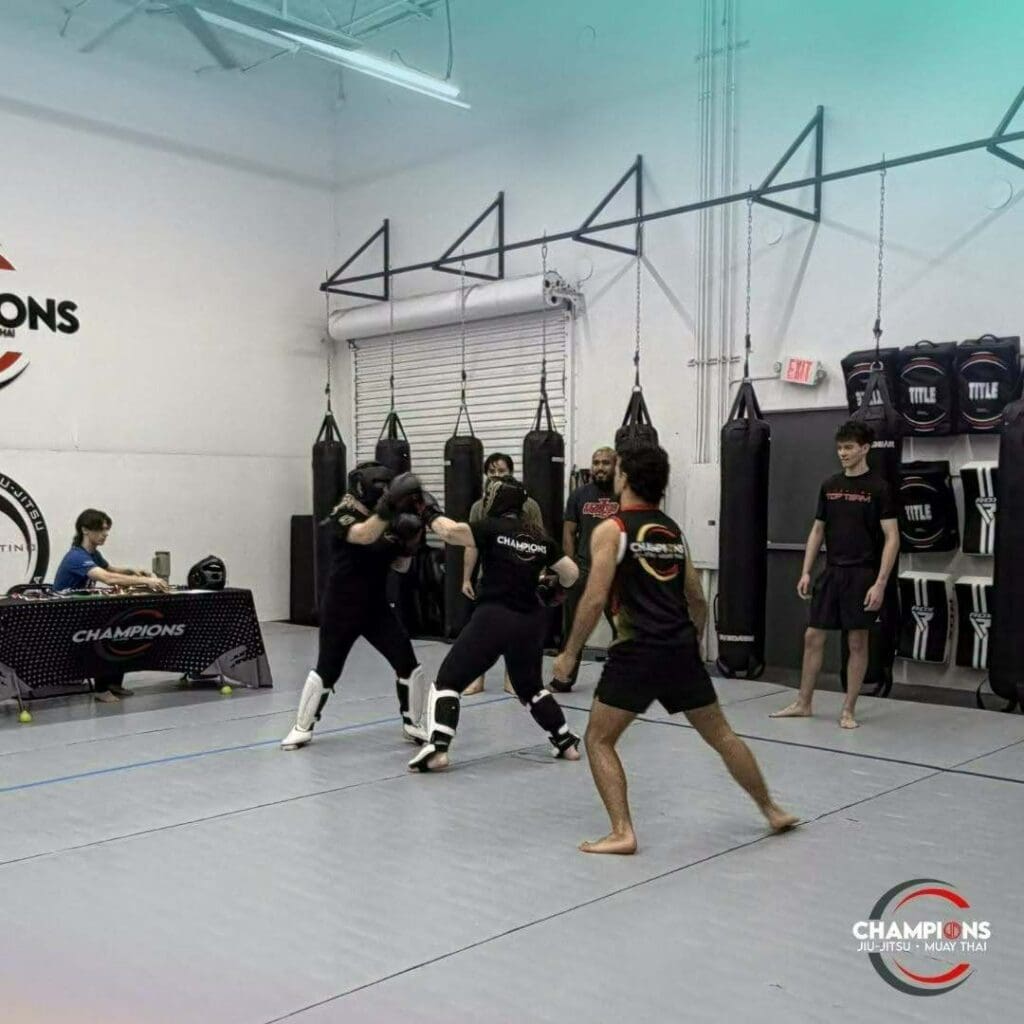
Sparring is where we apply everything we have learned against a moving, thinking partner. But sparring for beginners should not look like a fight. Controlled sparring for beginners uses manageable intensity and clear training goals so students can practice timing, distance, defense, and decision-making without treating every round like a competition.
Applying techniques against unpredictable movement
In drills, we know what is coming. In sparring, we do not. Applying techniques against unpredictable movement forces us to rely on our trained responses instead of memorized sequences.
This is a big step forward. It shows us how much we have actually internalized and what still needs more practice.
Developing timing rather than memorized responses
Real timing is not about memorizing patterns. It is about reading our partner and responding to what actually happens. Sparring gives us the reps we need to develop this skill.
Over time, we stop thinking about what to do and start just doing it. This shift is one of the most rewarding parts of long-term training.
Learning to make decisions under pressure
Pressure changes how we think. Ego, pressure, and chaotic movement can make even simple techniques feel impossible. But through regular controlled sparring, we get used to making decisions in real time.
This skill transfers beyond the mat. Confidence and the ability to respond safely in real situations can improve when we train regularly under manageable pressure. We learn to stay calm and think clearly.
How Feedback Improves Martial Arts Technique
Feedback is what turns practice into improvement. Without feedback, we can repeat the same mistakes for months without knowing it. Good feedback speeds up our development significantly.
Instructor corrections
Instructors are incredible teachers because they see what we cannot see about our own movement. They spot small errors that have a big impact on performance. One correction at the right moment can change our technique permanently.
Feedback from training partners
Our training partners also give us feedback, even when they do not say a word. If a technique does not work against a partner, that is feedback. If they move in a way we did not expect, that is feedback too.
We learn to pay attention to these responses. They show us the real-world gaps in our technique that we might miss during solo practice.
Learning from unsuccessful attempts
Not every technique works the first time. Or the tenth time. But unsuccessful attempts are not failures – they are information. They tell us what adjustment to make next.
Beginners should view their training experiences through this lens. Every attempt, successful or not, teaches us something. The students who improve fastest are often the ones who stay curious about why something did not work.
Making small technical adjustments
Big changes to technique rarely work. What actually helps is small, specific adjustments made one at a time.
Move the hand a little higher. Shift the weight forward slightly. Rotate the hip a bit more.
These tiny changes add up over time. Through consistent feedback and repetition, small adjustments become permanent improvements in our technique.
How Martial Arts Skills Progress Over Time
Martial arts skill progression does not happen all at once. It follows a natural order that builds each layer on top of the previous one. Rushing this order never works as well as trusting the process.
Understanding before speed
We need to understand what a technique is trying to do before we try to do it fast. Speed without understanding creates sloppy movement. Understanding first allows speed to develop naturally.
Accuracy before power
Accuracy means hitting the right target, at the right angle, with the right body position. Power comes later, once our accuracy is reliable. Trying to add power before accuracy just means we are hitting hard in the wrong place.
Cooperative drills before resistance
We practice with cooperation first so we can learn the shape of the technique. Once we understand it, we introduce resistance. This order protects our learning and builds correct habits.
Technique before improvisation
Improvisation is great – but only after we have mastered the fundamentals. Advanced techniques and creative combinations only work when they are built on a solid base. Without that base, improvisation just creates chaos.
Combining individual skills into fluid movement
Eventually, individual skills begin to connect. Footwork links with striking. Defense connects to counterattack. Developing muscle memory allows these movements to connect without conscious thought.
This is when training starts to feel natural. The pieces stop feeling like separate skills and start feeling like one continuous flow of movement.
Common Beginner Mistakes During Martial Arts Training
Understanding what not to do is just as important as knowing what to do. These are the most common mistakes we see beginners make, and avoiding them can speed up progress significantly.
Trying to move too quickly
Speed feels like progress, but moving too fast before the technique is correct just locks in bad habits. Slow practice with correct form will always beat fast practice with poor form in the long run.
Using strength instead of technique
Using strength to overpower an opponent can work sometimes, especially early on. But relying on strength means we never build real skill. When we meet someone stronger, we have nothing to fall back on. Technique is what makes martial arts work at any size or strength level.
Skipping fundamental movements
The fundamentals include movements that may seem too simple to bother with. But skipping them creates gaps that appear later when training gets harder. There are no shortcuts past the basics.
Comparing progress with experienced students
Every martial artist started at zero. Watching advanced martial artists and feeling behind is natural, but it is not helpful. We each follow our own progression timeline. Comparison steals focus from our own development.
Treating every drill like a competition
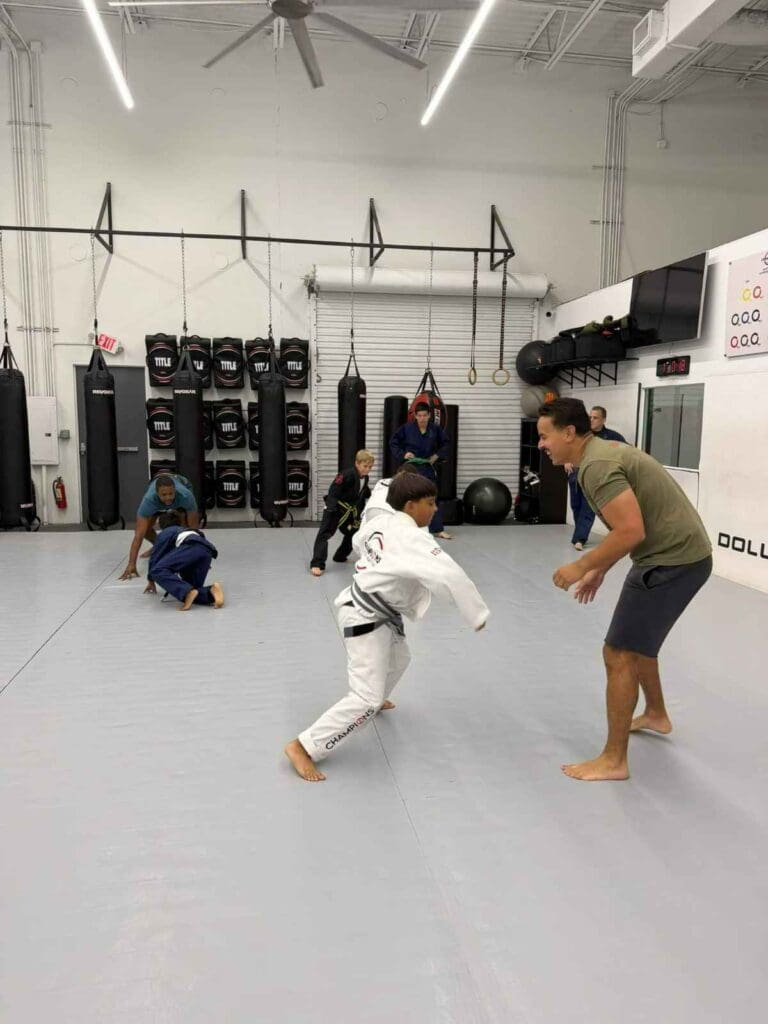
Some beginners treat every partner drill like a fight they need to win. But drills are for learning, not winning. When we go too hard in a drill, we stop learning and start just trying to survive.
New adults build confidence faster when they approach drills with curiosity instead of competition. Let the technique work. Trust the process.
How Beginners Can Practice Martial Arts More Effectively
Small changes in how we approach practice can make a big difference. These habits help beginners get more value from programs designed to build strong fundamentals.
Focus on one technical detail at a time
Trying to fix everything at once is overwhelming and usually ineffective. Pick one thing – maybe hip rotation, maybe stance width – and focus on it for an entire session. One clear focus brings faster results than scattered attention.
Ask specific questions
Vague questions get vague answers. Instead of asking “Am I doing this right?”, try asking “Is my elbow in the right position for this block?” Specific questions lead to specific feedback that we can actually use.
Practice movements slowly first
Slow practice reveals errors. When we move slowly, we feel exactly what is happening in our body. This awareness is also valuable when modifying martial arts training around an injury, because movements and intensity can be adjusted according to individual limitations.
Use feedback during repetitions
Do not wait until the end of a drill to apply feedback. If an instructor corrects something mid-drill, apply it immediately. Repetitions with active feedback build better habits faster than repetitions done on autopilot.
Prioritize consistency over complexity
It is better to do 1 technique correctly 50 times than to do 10 techniques poorly 5 times each. Consistency builds the foundation that complexity later rests on. Different applications require the same strong base.
How the Different Parts of Martial Arts Training Work Together
Training the mind and body together requires a system in which every part supports the others. Martial arts training fundamentals do not work in isolation – each part of the training process feeds into the next.
Instruction creates understanding
Good instruction gives us the mental map of a technique. We understand what we are trying to do and why. Without this understanding, repetition becomes blind and less effective.
Drilling creates consistency
Drilling takes the concept from instruction and builds it into the body. Through repetition under controlled conditions, technique becomes reliable. Martial artists practice these elements repeatedly because consistency is the goal.
Partner work creates adaptability
Working with partners teaches us to apply consistent technique against variable movement. This adaptability is essential. Real situations never look exactly like the drill. Partner work bridges that gap.
Sparring develops decision-making
Structured fighting drills and controlled sparring force us to make real-time decisions. We choose when to engage, when to defend, and when to wait. During kumite, a training partner creates a dynamic situation that tests everything learned in drills and partner work.
Feedback drives continued improvement
Feedback keeps all of this honest. It prevents us from building bad habits and helps us refine good ones. Without feedback, even dedicated practice can plateau. With feedback, progress continues as long as we train.
Building a Strong Foundation for Long-Term Martial Arts Training
The best martial artists return to their fundamentals throughout their entire career. Stories of successful martial artists almost always include a deep respect for the basics. Long-term success in martial arts is not about learning more and more techniques. It is about refining what we already know.
Structured training allows us to keep adding complexity while always staying connected to our foundation. As we grow, the fundamentals do not become less important. They become more important because they support everything new we learn.
Body control, discipline, and efficiency allow us to do more with less effort over time. Our movement becomes cleaner. Our timing gets sharper. Our responses become faster and more accurate.
All of this happens because we never stopped caring about the basics.
A strong foundation built through coached progression is what makes this possible. Having instructors guide us through each stage ensures that we build correctly and do not skip important steps. Experienced instructors have guided many students through this process, and the results speak for themselves.
We also encourage students to develop the right mindset from the very beginning of training. The right training mindset means approaching every session with patience, focus, and a willingness to learn. This mindset is just as fundamental as any physical skill.
Common Questions About Martial Arts Training Fundamentals
1. What skills do martial arts beginners learn first?
Beginners commonly start with posture, stance, balance, movement, distance management, basic defensive actions, and simple techniques. These foundational abilities make more advanced movements easier to learn later. Training usually emphasizes correct positioning and controlled movement before students are expected to add significant speed, power, combinations, or resistance.
2. Why is drilling important in martial arts training?
Drilling gives students repeated opportunities to practice a technique under controlled conditions. Repetition helps improve positioning, coordination, timing, and consistency before greater resistance is introduced. As students become more comfortable with the movement, drills can become progressively less predictable so the technique can eventually be applied during live training.
3. What is the difference between drilling and sparring?
Drilling usually focuses on practicing a defined technique, movement, or situation with predictable or gradually increasing resistance. Sparring introduces greater unpredictability because training partners can choose different actions and reactions. Drilling develops technical consistency, while controlled sparring teaches students when and how to apply those techniques against changing movement.
Start Your Martial Arts Journey With Confidence
Martial arts training fundamentals provide the foundation for developing technique, movement, balance, timing, and control. Structured drills help students practice these skills repeatedly, while coached progression allows them to improve gradually without adding too much speed or resistance too early. Over time, consistent practice can improve posture, coordination, breathing, and muscle memory, making movements more efficient and reliable.
For beginners, training usually starts with basic striking fundamentals, movement patterns, defensive skills, and simple partner exercises. As these skills become more consistent, students can progress to resistance-based drills and controlled sparring. This gradual approach helps beginners understand how individual techniques connect and how to apply them safely in more dynamic training situations.


